


Michelle T.


Aziz


Lulu


Nadine


Zahy


Georges


Roni


Aline


Ali


Sirine




 It includes a spacious lobby that joins the three, old buildings, reading and exhibition areas, a coffee place, a gallery, and an auditorium. I think it relates to Jounieh because of its historic context.
  The way Piano uses the grid and the cube to create a harmonious connection is very interesting. Plus, his generous spaces in a small area are nice. Incorporating greenery also shows sensitivity.
 I was recently skimming through ‘domus’ - an architecture magazine, when I came across Steven Holl’s latest project the Herning Museum of Contemporary Art, Denmark. Although the scale of the building area is much larger (5600 meters square compared to Jounieh’s building area 425.5 meters square) and despite the fact that Jounieh is in an urban context, I thought a look at the partitioning of the floor plans would be helpful.
 On the ground floor plan, after entering the museum, there’s a space for the permanent exhibition on the right and a space for temporary exhibitions on the left. These two exhibition spaces are large rectangles taking up most of the ground floor plan space, and if one looks on the plans they’re two regular spaces inside the irregular shaped museum. To the right of the permanent exhibition space is the auditorium that can accommodate for up 150 people. And behind the auditorium is a space for music rehearsals. Behind the permanent exhibition space is a small library connected to a discovery center.
 Behind the temporary exhibition space is a restaurant overlooking a square and in front of it are the offices. Going up to the first floor, there are four spaces for storage, a workshop area and a large mechanical room.
 I thought a look at the divisions would be helpful since we were having trouble planning out the spaces of different functions in our library.
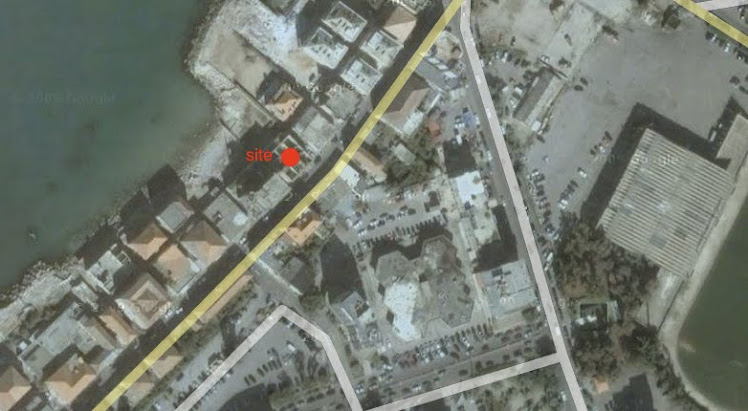
 I further looked into the project. The scale was of course much larger than the one we are working with, the building spams 160 meters in diameter, it reaches up 32 meters and an additional 12 meters into the ground. However I found it's context to be far more similar, the library is in an urban environment and it sits between the sea and a street very much like the site in Jounieh. It is also a historical context where more could be elaborated on the building's shape and its philosophical or historical relationship. For example the fact that the building does not sit on the earth but is rising from it or "is a part of it". Further contemplation and debate could go on about the way it links the earth and sky or the granite wall resembling the cliff near the Nile etc etc... At last this library is a good example for me to look into because it provides mostly a proposition of the type of openings and roof I can have for my library design and possibly some ideas for the interior aswell.


